
In this special Pride edition, Shrieks & Whisper’s resident literary critic, Harriet Sprout, shares the month’s most interesting publications.
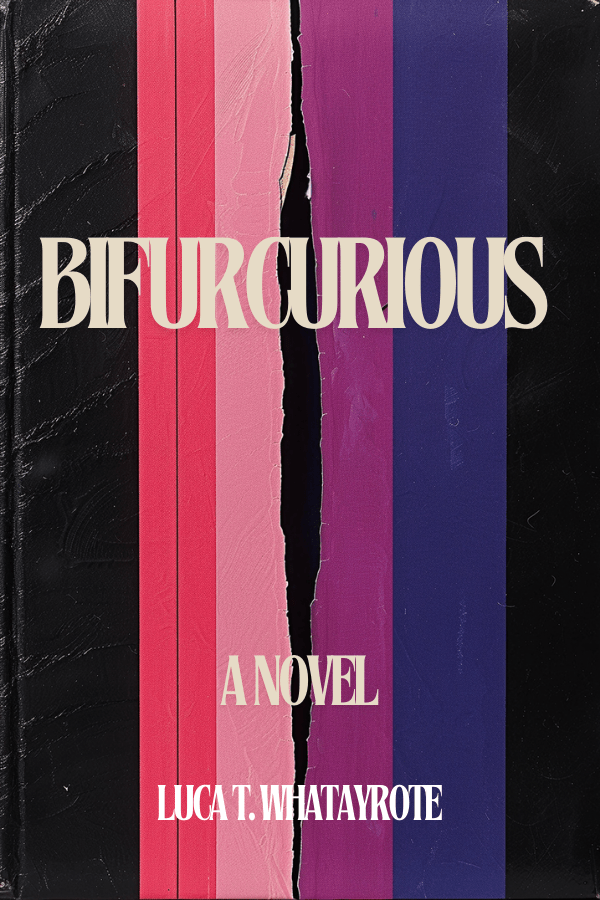
Bifurcurious by Luca T. Whatayrote
Whatayrote’s latest novel delivers everything we’ve come to expect from him and more. Bifurcurious follows a uniquely Whatayrotian protagonist: a young womanizer named Jonah, who, in his youth, was part of a cruel psychological experiment that left him with the insatiable desire to split everything he sees in half.
While Jonah is usually able to repress that desire or sublimate it–there is an important scene featuring a bag of clementines, a girl from Tinder, and a spork–he finds his conditioning going haywire when he has an unexpected drunken encounter with Lukas, a prettyboy he runs into at a bar.
From there, Whatayrote expertly explores themes of childhood trauma, sexuality, and the fundamental essence of humanity. A true delight! Not that we expected any less, of course.
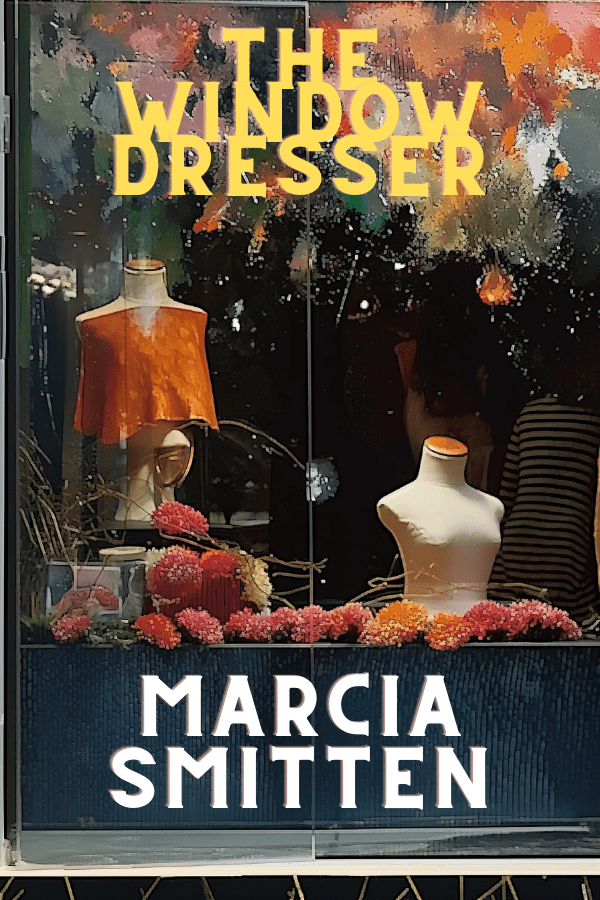
The Window Dresser by Marcia Smitten
The titular window dresser of Smitten’s charming debut novel bears her label for two reasons. First, she works as one of the last professional window dressers in New York City, trying desperately to keep the traditional queer art form alive. Second, she is an exhibitionist who breaks into the very department stores she works for and poses nude behind the display window until the police force her to get dressed.
Smitten has created something wholly new, a novel that begins to grapple with questions most people have never even thought to ask, for example: what difficulties lie at the intersection of lesbianism and window dressing?
I find myself wishing, however, that it had a little more substance, but Smitten’s journey as an author is truly just beginning. The Window Dresser could be the beginning of a long and fruitful career or an insignificant one-hit wonder; only time will tell.
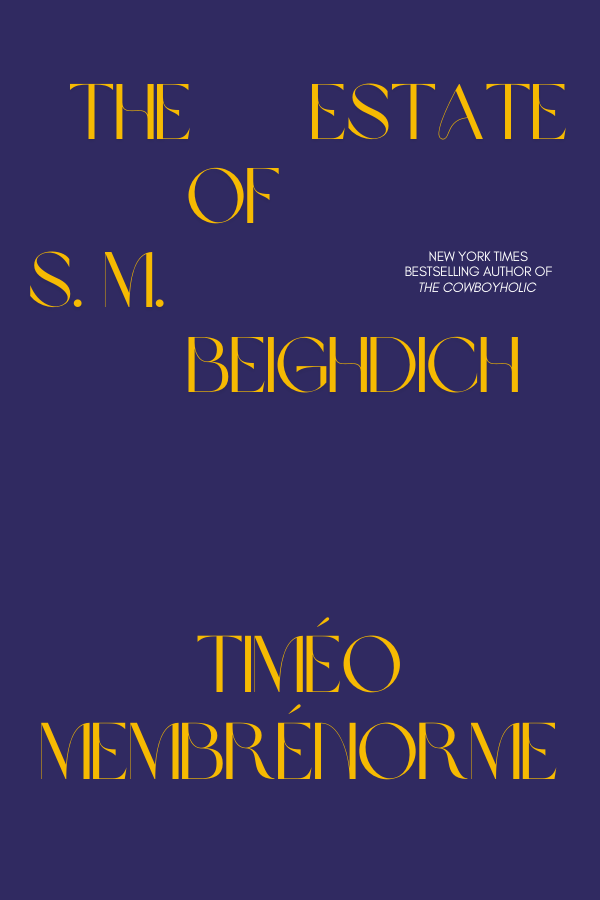
The Estate of S. M. Beighdich by Timéo Membrénorme
Membrénorme has written period fiction. Membrénorme has written smut. What Membrénorme has never written, despite rabid demands from his fans, is period smut.
Until now. The novel takes place in the early 19th century, and the protagonist, S. M. Beighdich, seems to have been designed just to meet those fans’ demands.
Beighdich is a shrewd businessman and patron of the arts who hosts an important yearly competition: the Contest of Men Adorned in Women’s Attire. If you’re thinking that Membrénorme has just written a version of RuPaul’s Drag Race set in the 1800’s, you’re not seeing the whole picture; the book is also basically pornography.
While some might be able to stomach all five hundred pages, I admit that I had to tap out halfway through when Lord Byron makes an appearance in Bieghdich’s estate. Some things should remain sacred.

McLearpugh’s newest verse novel follows the intertwined lives of two Long Islanders: Kacey Gull, a lesbian woman, and Penn Guinn, a gay man. The strength is in the shockingly candid dialog between the characters, who muse about life, love, and liberty–or the lack thereof.
It is McLearpugh’s first foray into verse, and I can’t help but wonder if the story might have been better told in prose, especially since her past work has been consistently disarming and though-provoking
You have to give McLearpugh credit for trying something new, but there are moments of such bizare circumstances and behavior that I have to wonder if she got so lost trying to fit the story into the rhyme scheme that she lost sight of the actual plot. Case in point/:
“Do you ever start to hate Long Island?“
Penn asked Kacey who was knitting a scarf.
“No” she replied with a big smile and
Meanwhile a dog said “arf arf arf arf”
“I just think,” he said, “It’s a vile land.”
She looked up and said “I think it has charm.”
“It doesn’t even have good style and
it smells” he replied and moved his left arm.
Not Nobel-winning stuff here by any means.
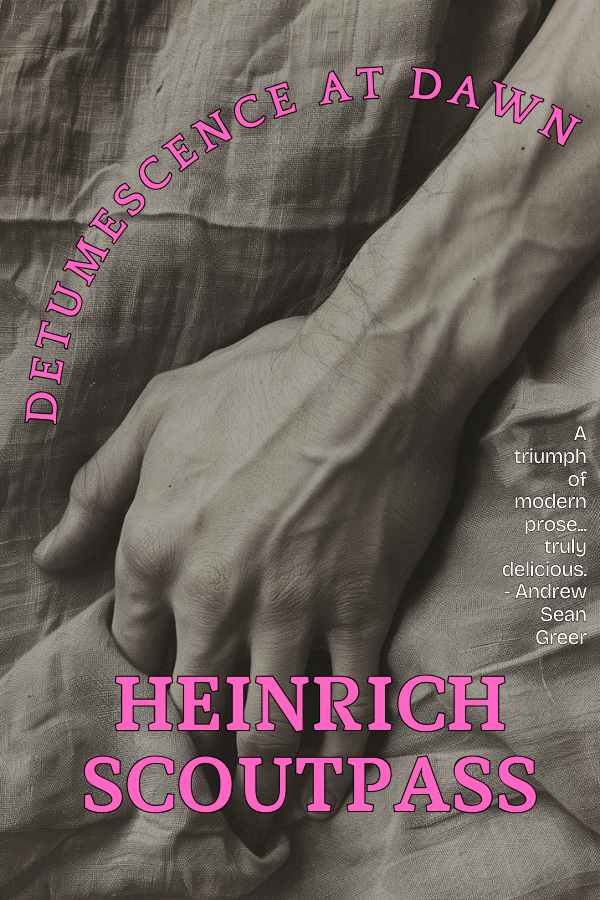
Scoutpass’ novel follows a nameless protagonist through ten years of his life, with an important narrative caveat: the story is only told through his postcoital episodes.
This results in some thought-provoking pacing; we sometimes check in with the protagonist several times a day, and sometimes only a few times a month.
By limiting himself to this peculiar narrative structure, Scoutpass encourages us to ponder the relationship between sexuality and identity. When the protagonist is in one of his promiscuous phases or in a relationship, we watch his character develop and learn more about his life. When he is on a dry streak, he quite literally ceases to exist, at least for us, the readers.
I wouldn’t be surprised to see a musical adaptation come out in the near future. A rare genuine triumph of literature, I recommend this novel to anybody.



 Shrieks & Whispers
Leave a comment